

Beyond Performance — Toward Purpose
Lasting performance is alignment, not intensity.
Every organisation wants high performance. Few get it in a way that survives the next quarter. Pressure, incentives, and relentless targets can produce a spike. Over time, performance driven by fear or fatigue falls over.
True high performance shows up when people know why the work matters, trust the people beside them, and can excel without constant supervision. At Elite Coaches Group we keep seeing the same pattern: lasting performance is less a product of systems and more a reflection of leadership culture.
The Four Foundations of a High-Performance Culture
Four foundations keep showing up: vision, psychological safety, ownership, and recognition.
| Foundation | What it looks like in practice | What it is not |
|---|---|---|
| Clarity of vision | Everyone can say what success is and why it matters | A slogan nobody can use on Monday |
| Trust and safety | People can name a mistake without being punished for honesty | Endless meetings with no decision |
| Ownership | Named people own outcomes, not just tasks | Control disguised as “standards” |
| Recognition and growth | The right behaviours get named and developed | Annual awards with no everyday feedback |
1. Clarity of Vision
Teams cannot perform if they are unclear on direction. High-performing organisations make sure people know what success looks like and why it matters.
2. Trust and Psychological Safety
Fear suppresses useful ideas. The better teams allow honest dialogue, treat mistakes as data, and treat feedback as part of the job.
3. Ownership and Accountability
High performance thrives when responsibility is distributed. When people are trusted to own results, they often rise. Leaders move from managing tasks to making outcomes visible.
4. Recognition and Growth
Performance does not last without appreciation. Serious leaders make recognition specific — the right behaviours, the values they want repeated, and a link to how someone can grow.
Leadership’s Role: Energy and Example
Culture reflects the energy of its leaders.
When leaders are consistent, curious, and values-driven, teams usually respond in kind. When leaders become reactive or purely transactional, performance follows that weather.
Coaching helps leaders hold the mix of focus, empathy, and stamina that teams feel in the room. It also helps them step back when momentum drifts and reset the conversation.
Coaching the Culture
Coaches at Elite Coaches Group work with organisations on leadership cultures that can scale:
- A shared language for performance and values.
- Leadership rhythms that keep people engaged.
- Leaders who model clarity, consistency, and care.
High-performing cultures are not built in a quarterly campaign. They are built in ordinary conversations, one at a time.
The Takeaway
Sustained success depends less on who you hire and more on the culture you keep practising.
When leaders invest in the mindset and environment that make good work the default, growth is more likely to follow — as a byproduct, not a chase.
Culture is a rhythm, not a campaign
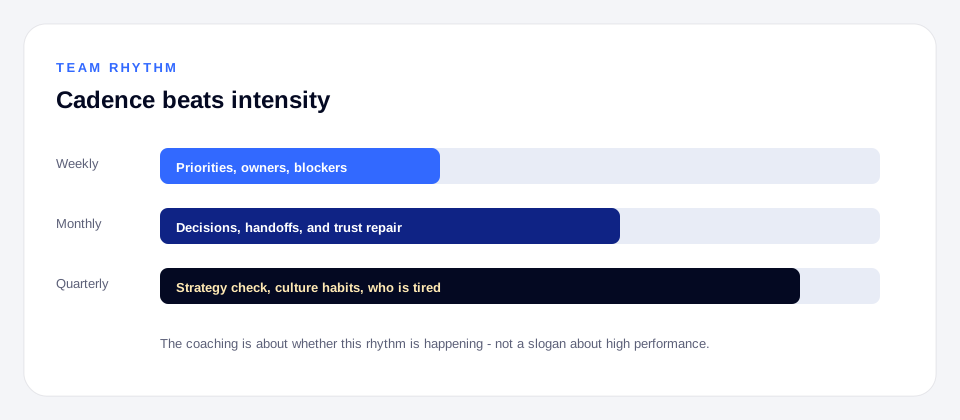
A culture that lasts is usually a calendar: weekly owners and blockers, monthly decision reviews, a quarterly look at who is tired and whether the strategy still has a name on it. Intensity without that rhythm is just a busy quarter.
If the live problem is a leadership group that cannot decide together, the practical door is high-performance team development. If the live problem is a whole-company transition, see organisational transformation. How a leader’s own habits set the weather is the subject of the mindset of transformational leadership. To talk about any of that as work rather than as a slogan, write to us.
Ask a blunt question in the next senior meeting: what still happens here when nobody is performing “culture”? The useful answers are small — a handoff that no longer needs the CEO, a mistake that can be named without theatre, a recognition that happened on a Tuesday. Those are the foundations from the table above, practised, not laminated.